

UNION BUDGET 2026–27 CITI ASHWIN CHANDRAN TEXTILE AND APPAREL SECTOR GLOBAL COMPETITIVENESS EXPORTS EMPLOYMENT NATIONAL FIBRE MISSION TEX-ECO INITIATIVE MEGA TEXTILE PARKS SAMARTH 2.0 MSME SUPPORT HANDLOOM AND HANDICRAFTS INDIA-EU FTA LOGI NATIONAL
NEW DELHI, INDIA
By IFAB MEDIA - NEWS BUREAU - February 2, 2026 | 2 5 minutes read





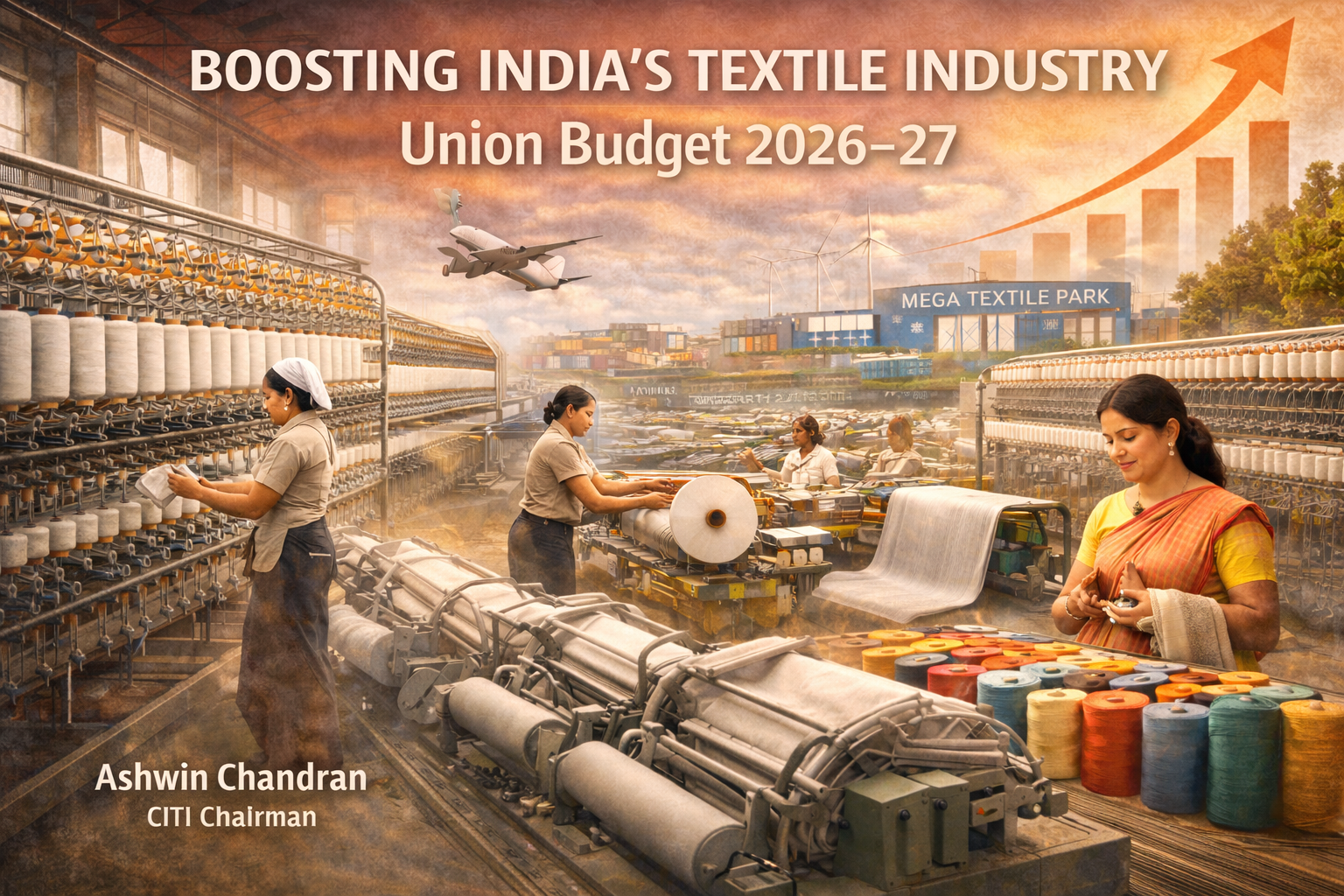
The Confederation of Indian Textile Industry (CITI) warmly welcomes the Union Budget for the financial year 2026–27 presented by the Hon’ble Finance Minister, Nirmala Sitharaman, for the decisive boost it can provide to the pivotal textile and apparel sector in raising its global competitiveness, increasing exports, and safeguarding employment.
Commenting on the Budget, CITI Chairman Ashwin Chandran said, “The Budget is a strong manifestation of the Government’s commitment to future-proof the textile and apparel sector, make it more resilient to global headwinds, and comes as a huge shot in the arm for the industry.”
“We convey our heartfelt gratitude to the Hon’ble Prime Minister, the Finance Minister, the Textiles Minister and all senior officials for announcing measures that will help the textile and apparel industry attain greater heights, emerge in a stronger position to contribute to the Viksit Bharat (developed India) mission, and create more and better-quality jobs,” he added.
The CITI Chairman said the launch of the National Fibre Mission, announcements about the Mahatma Gandhi Gram Swaraj Initiative, Tex-Eco Initiative, establishment of mega textile parks in challenge mode, textile expansion and employment to modernise traditional clusters, National Handloom and Handicrafts Programme, and the SAMARTH 2.0 skill development scheme will help local manufacturers become more efficient, innovative and sustainable, and expand their presence in global markets.
Referring to the three Kartavyas that inspired the Budget, Chandran observed, “The first Kartavya focuses on improving cost competitiveness. While we are studying the proposal, no direct announcement for the removal of import duty was made towards improving the cost competitiveness of Indian cotton-based products, which accounts for about 60% of India’s total textile and apparel market.”
The CITI Chairman welcomed the Government’s emphasis on nurturing champion MSMEs and supporting micro enterprises, noting that the textile and apparel sector is predominantly MSME-driven. However, he pointed out that the industry has consistently sought a dedicated investment incentivisation scheme, particularly to support MSMEs in transitioning towards sustainable production models, which will also help in leveraging the upcoming India-EU FTA. “While the details of the Tex-Eco initiative are awaited, the absence of a direct investment support mechanism is felt,” he said.
The proposal to extend the time period for export of final product from the existing 6 months to one year for exporters of textile garments, enhanced focus on improving logistics through freight corridors, the decision to establish a High-Level Committee on Banking for Viksit Bharat, and simplification of export-import procedures are also particularly welcome, he added.
“On its part, CITI reiterates its commitment to work closely with the Government to ensure effective implementation of the announced measures, keeping in mind the national aim of creating a $350 billion textile and apparel industry by 2030, including achieving exports worth $100 billion by that period,” Chandran said.
India’s textile and apparel industry is the second-biggest generator of jobs and livelihoods in the country. It is also a significant contributor to the GDP and the nation’s overall exports.
The textile and apparel sector has been adversely affected by the 50% US tariff on Indian goods, effective August 27, 2025, which has put exports worth billions of dollars and millions of jobs at risk. The US is the single-largest market for India’s textile and apparel exports. At nearly $11 billion, India’s exports of textile and apparel items to the US accounted for close to 28% of the country’s total exports of these products in the financial year 2024-25.


