

MINISTRY OF TEXTILES UNION BUDGET 2026–27 REGIONAL CONSULTATION WORKSHOP NEELAM SHAMI RAO INDIA TEXTILE INDUSTRY USD 350 BILLION TEXTILE MARKET TEEM SCHEME TEX-ECO INITIATIVE MEGA TEXTILE PARKS NATIONAL FIBRE MISSION SAMARTH 2.0 HANDLOOM AND NATIONAL
NEW DELHI, INDIA
By IFAB MEDIA - NEWS BUREAU - April 9, 2026 | 47 3 minutes read





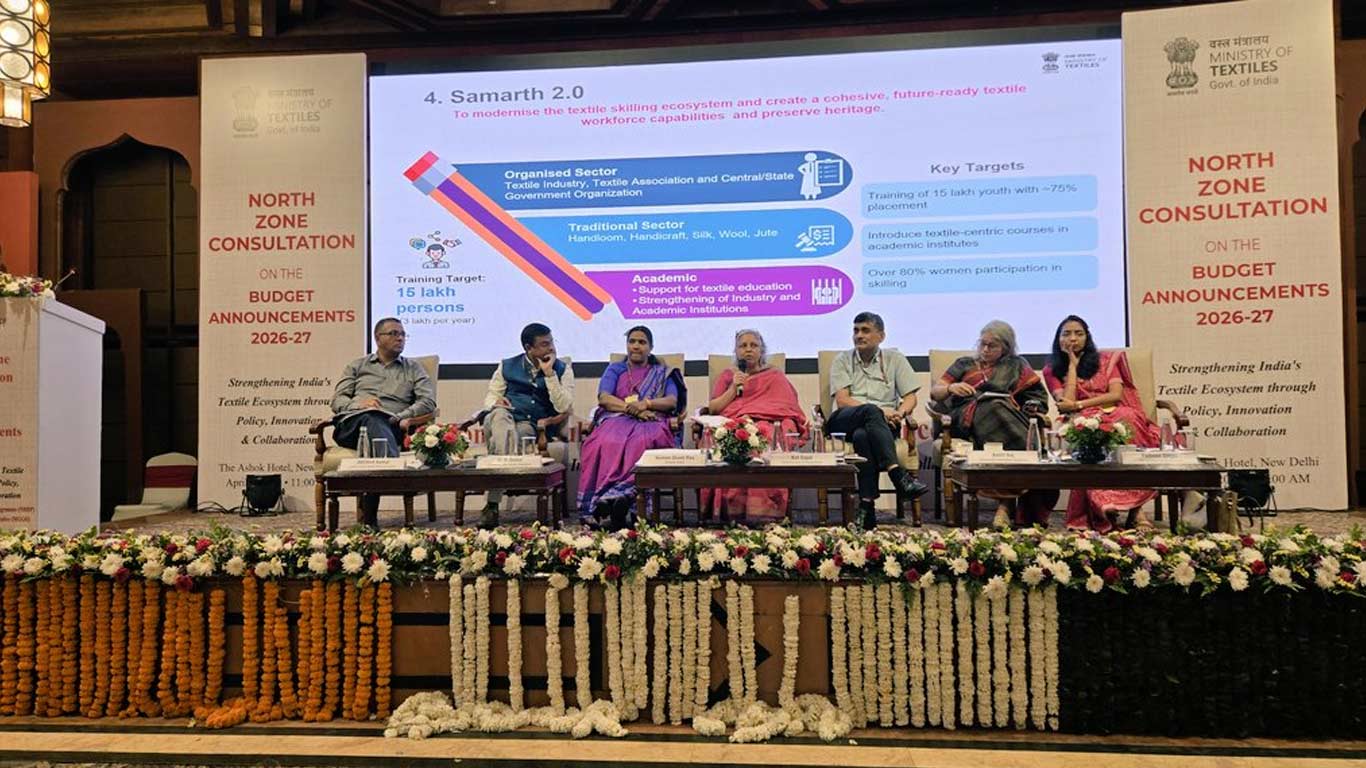
The Ministry of Textiles on Tuesday organised a regional consultation workshop with industry stakeholders from Northern Zone on schemes and announcements made in the Union Budget 2026–27 in New Delhi.
The workshop saw participation from over 200 stakeholders, including representatives from state governments, industry bodies, entrepreneurs, academia, export promotion councils, and artisans.
As part of the Ministry’s efforts to review key Budget schemes, the consultation aimed to facilitate structured discussions on implementation, identify operational challenges, and ensure timely execution.
Textiles Ministry Secretary Neelam Shami Rao said India’s textile industry is projected to reach USD 350 billion by 2030, with exports set to grow significantly, and stressed the need to boost innovation, strengthen ecosystem linkages, and improve cost competitiveness.
Rao noted that the inputs received during the consultation will be examined and incorporated into the design and rollout of upcoming schemes.
Focus Areas and Deliberations
The workshop featured breakout sessions covering major priority areas such as the Integrated Programme for the Textile Sector, including the Textile Expansion and Employment (TEEM) Scheme, Tex-Eco Initiative, Mega Textile Parks, the National Fibre Mission, SAMARTH 2.0, and schemes related to handloom and handicrafts.
Emphasis on Collaboration and Ground-Level Inputs
Asit Gopal, Special Secretary and Financial Adviser, Textiles Ministry, highlighted the need for continuous engagement with states and stakeholders to align policy design with on-ground realities. He stressed that coordinated planning and institutional convergence will be key to achieving desired outcomes.
Development Commissioner (Handlooms) Dr. M. Beena emphasised the need to incorporate field-level feedback to improve implementation, particularly to strengthen the handloom sector, and urged stakeholder participation.


