

INDIA VIETNAM TEXTILE INDUSTRY LEATHER INDUSTRY FOOTWEAR SECTOR VALUE CHAIN INTEGRATION SUSTAINABILITY DIGITALISATION SILK SECTOR TRADE COOPERATION INVESTMENT OPPORTUNITIES JOINT VENTURES SUPPLY CHAIN TECHNOLOGY EXCHANGE NATIONAL
NEW DELHI, INDIA
By IFAB MEDIA - NEWS BUREAU - April 24, 2026 | 51 3 minutes read





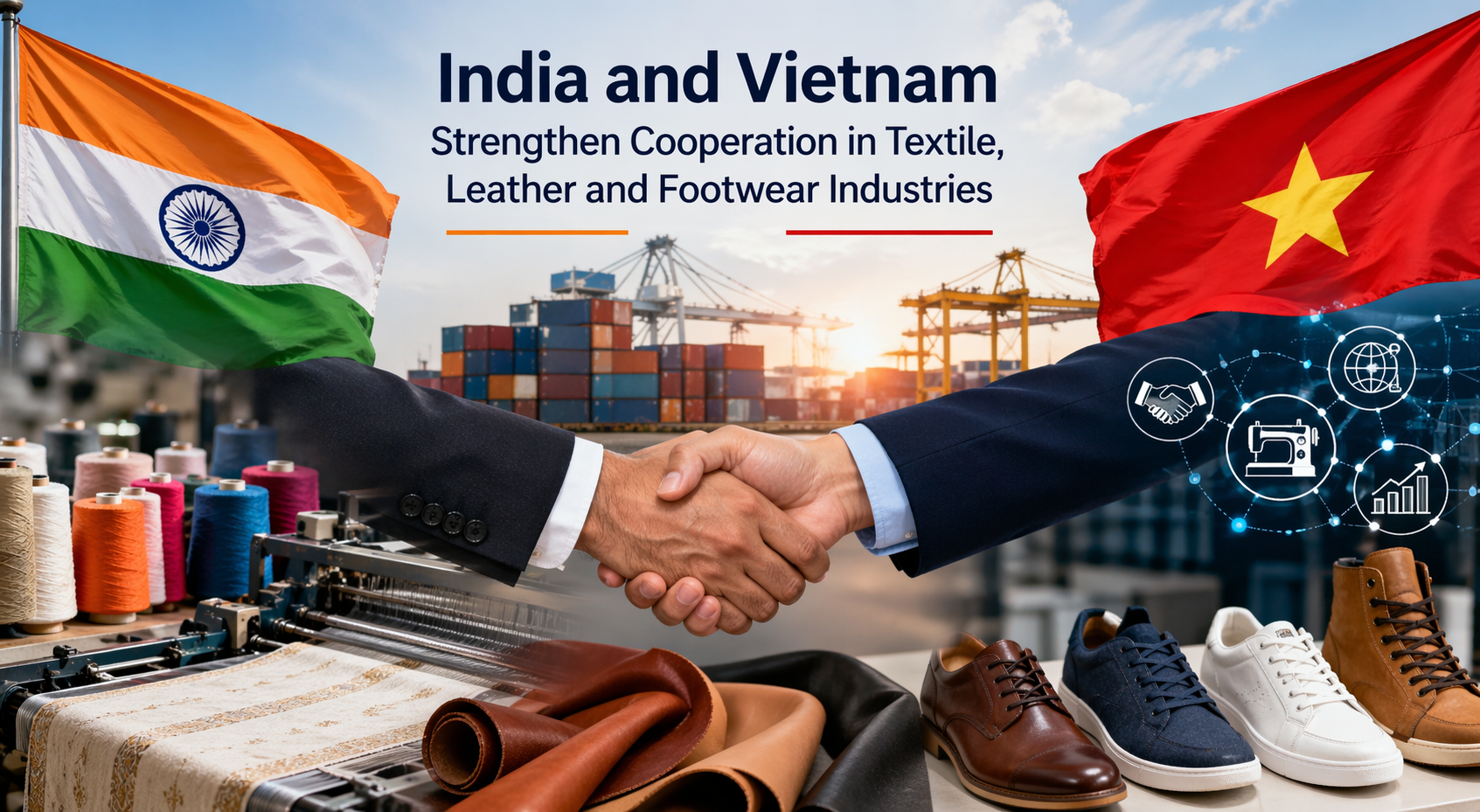
India and Vietnam are advancing their bilateral engagement across textiles, leather, and footwear, signalling a renewed push to build stronger, more integrated value chains amid evolving global industry dynamics.
Efforts are being directed towards enhancing connectivity, fostering innovation, and creating collaborative production ecosystems that can respond to the increasing global shift towards sustainability and digitalisation. According to reports, stakeholders from both countries are actively exploring opportunities to deepen cooperation across multiple segments of the industry.
Vietnam’s Trade Counsellor to India, Bui Trung Thuong, highlighted the complementary strengths of the two economies, noting that both nations are strategically positioned within global textile and footwear value chains. As industries worldwide undergo transformation, this alignment offers a strong foundation for mutually beneficial growth.
Industry experts have underscored that closer collaboration could accelerate the development of integrated production networks, enhance product value, and unlock new avenues in trade, investment, and technology exchange.
Particular focus is being placed on the silk sector, where significant potential exists for joint initiatives in breeding technology, skill development, and innovation in high-quality product manufacturing. Experts also see promise in expanding silk applications beyond traditional textiles into advanced materials.
From an investment standpoint, the synergy between the two markets is evident. While Vietnam continues to strengthen its capabilities in garment manufacturing, India offers a robust base in raw materials and textile inputs. This complementary positioning is expected to facilitate joint ventures and deeper supply chain integration.
Additionally, representatives from research institutions have called for enhanced scientific collaboration through joint projects, knowledge sharing, and expanded training programmes. Increasing participation in global industry platforms has also been identified as a key priority, further reinforcing the long-term potential of this partnership.


