

PADMA DOREE North Eastern Handicrafts and Handlooms Development Corporation CHANDERI ERI SILK NORTHEAST INDIA MADHYA PRADESH SUSTAINABLE TEXTILES INDIGENOUS LUXURY ARTISAN COLLABORATION MAKE IN INDIA HANDLOOM HERITAGE TEXTILE INNOVATION NATIONAL
NEW DELHI, INDIA
By IFAB MEDIA - NEWS BUREAU - May 4, 2026 | 28 5 minutes read





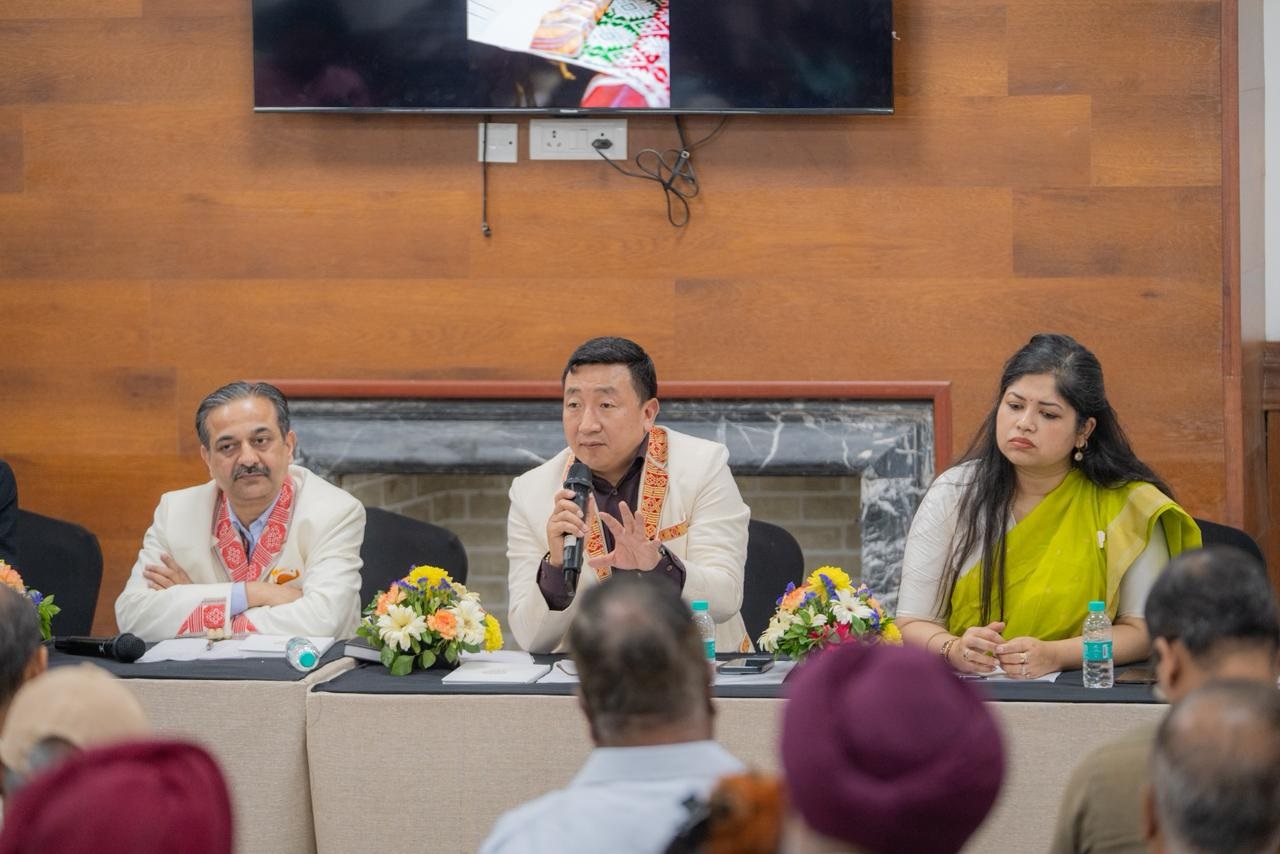
Padma Doree, a new textile born from the convergence of two distinct craft traditions, Chanderi from Madhya Pradesh and Eri Silk from Northeast India, was formally unveiled today.
Conceived by the North Eastern Handicrafts and Handlooms Development Corporation (NEHHDC) under the Ministry of DoNER, Padma Doree was envisioned not as a conventional brand but as a platform, one that brings fibre, craft, and design into shared conversation. The initiative explored how traditional textile practices could evolve through collaboration across regions, materials, and makers, with artisans remaining central to the process and sustainability embedded within it from the outset.
.jpg)
The day opened with curated exhibition walkthroughs and media interactions, offering a closer look at the material, its development, and the collaborative processes behind it. A keynote address by project leads and associated voices situated Padma Doree within a broader dialogue on Indian textiles, innovation, and indigenous luxury.
The formal unveiling gave way to an evening presentation that brought together fashion and performance. Featuring Na U Bnai from Meghalaya and Yash Devle from Madhya Pradesh, the showcase reflected the same cross-regional exchange that defines the textile itself, translating it into movement, sound, and form.
While today marked the public debut, it also set the tone for the larger three-day showcase that followed. The exhibition was designed not as a static display but as an evolving environment where textiles, processes, and people intersected. Craft was present in the process, seen, discussed, and experienced through direct engagement.
Mara Kocho, Managing Director, NEHHDC, said: “Padma Dori brings together the fibre traditions of the North East and the handloom heritage of Chanderi, creating an integrated and sustainable textile ecosystem. It places artisans at the centre, ensuring their skills are valued and fairly compensated. True sustainability lies in recognising the effort behind such textiles and supporting craft with dignity and long-term relevance.”
Artisans from both Northeast India and Madhya Pradesh were present throughout, offering insight into the journey from eri fibre to finished fabric and the collaborations that shaped Padma Doree. Smaller, more intimate walkthroughs hosted by the team allowed for a closer understanding of the material and its making.
Food was woven into the experience of the opening day. Curated offerings by Chef Kashmiri Nath and Akhoi by Lin Laishram brought regional culinary practices into the same narrative, extending the spirit of collaboration beyond textiles into a wider cultural exchange.
Niraj Kumar, Joint Secretary, MDoNER, said, “Padma Dori reflects a strong inter-state collaboration that blends tradition with innovation. By combining Eri with Chanderi weaving, it strengthens India’s position in sustainable and ethical textiles. The initiative also reinforces the need for fair pricing, ensuring artisans benefit and enabling craft-led industries to grow globally.”
Positioned within the space of Indian indigenous luxury, Padma Doree proposes a quieter, more considered approach, one that builds on existing traditions while allowing them to evolve through meaningful dialogue. In doing so, it reaffirms the idea of a contemporary Make in India luxury: rooted in craft, material integrity, and regional knowledge systems, yet legible to a global audience. Rather than seeking external validation, Padma Doree places value on what is made within, demonstrating that luxury can be conceived, developed, and experienced wholly in India.
At its core, Padma Doree is less a singular unveiling and more the beginning of an ongoing platform: an exploration of fabric, people, and place, and of what becomes possible when India's textile traditions are brought into conversation with one another.


