

CRISIL RATINGS COTTON YARN INDUSTRY FY27 FISCAL 2027 REVENUE GROWTH EXPORTS CHINA BANGLADESH READyMADE GARMENTS HOME TEXTILES COTTON SPINNING COMPANIES YARN REALISATIONS OPERATING MARGIN COTTON-YARN SPREADS COTTON PRICES DOMESTIC MARKET TE NATIONAL
MUMBAI, MAHARASHTRA, INDIA
By IFAB MEDIA - NEWS BUREAU - July 27, 2026 | 277 4 minutes read





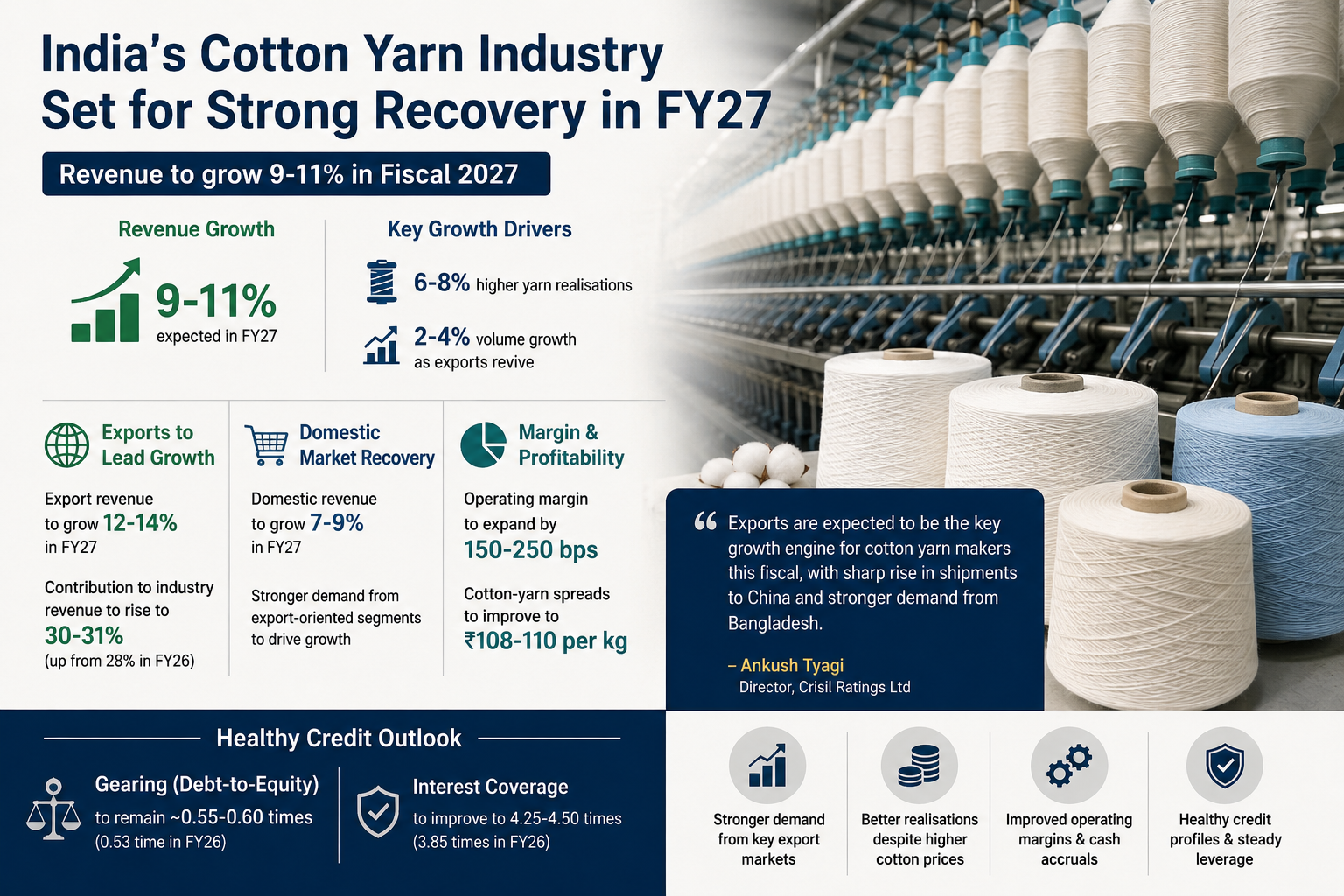
India's cotton yarn industry is poised for a healthy recovery in fiscal 2027, with revenue expected to rise 9-11% after a flattish fiscal 2026. The uptick will be driven by 6-8% higher yarn realisations and 2-4% volume growth as exports revive and export-oriented downstream segments1 such as readymade garments and home textiles regain momentum amid easing trade disruptions.
The revenue recovery is also expected to flow through to profitability, with operating margin likely to expand by 150-250 basis points, aided by higher cotton-yarn spreads. This, along with a larger revenue base, will support improved cash accruals and overall credit profiles, suggests an analysis of ~70 cotton spinning companies in the Crisil Ratings portfolio.
Ankush Tyagi, Director, Crisil Ratings Ltd, “Exports are expected to be the key growth engine for cotton yarn makers this fiscal, with export revenue likely to grow 12-14% and contribute 30-31% of industry revenue, up from 28% last fiscal. This will be supported by a sharp rise in shipments to China, India's second-largest export destination for cotton yarn, as lower domestic cotton acreage in China is expected to increase its import requirement. Further, demand from Bangladesh, the largest export destination for Indian cotton yarn, is also expected to strengthen as improving political stability aids the recovery of its readymade garments industry.”
Meanwhile, the domestic market, which accounts for the remaining ~70% of industry revenue, will also recover to grow by 7-9% in fiscal 2027 after remaining largely flat last fiscal. Improved offtake from export-oriented downstream segments such as readymade garments and home textiles, following the rationalisation of US tariffs from the highs of last fiscal, will be the key drivers. This will also support better realisations for the segment.
Recovery across export and domestic markets should lift cotton-yarn spreads to Rs 108-110 per Kg2 this fiscal, despite a 10-15% increase in cotton prices. This will be supported by stronger demand for cotton yarn which will improve the ability of spinners to pass on higher input costs. Consequently, operating margins are expected to strengthen to 11-12%, aided by better spreads, low-cost inventory carried into the fiscal3, and improved fixed-cost absorption.
Pranav Shandil, Associate Director, Crisil Ratings Ltd, “Higher operating profits are expected to strengthen cash accruals, providing adequate support to ongoing regular capex and bolster balance sheet strength. This should help maintain healthy credit profiles and steady leverage. Gearing (debt-to-equity ratio) is expected to remain under control at ~0.55-0.60 times (0.53 time in the previous fiscal), while interest coverage is likely to improve to 4.25-4.50 times this fiscal from 3.85 times in the previous fiscal.”
The industry remains largely insulated from the direct impact of the West Asia conflict, given its limited exposure to the region and the absence of any material reliance on crude-linked inputs.
Additionally, the headline tariff on Indian cotton yarn exports to the US remains largely unchanged following the recent announcement by the US4. However, any future tariff changes affecting the competitiveness of Indian exporters will remain a key monitorable. Further, the impact of El Niño on cotton output, or a significant divergence between domestic and international cotton prices, will also bear watching.


