

GIRIRAJ SINGH SURAT GUJARAT TEXTILE INDUSTRY TEXTILE MACHINERY DOMESTIC MANUFACTURING MAKE IN INDIA MANTRA MAN-MADE TEXTILES RESEARCH ASSOCIATION TEXTILE MACHINERY MANUFACTURERS TECHNOLOGY UPGRADATION RESEARCH AND DEVELOPMENT R&D IMPORT DEPEN NATIONAL
SURAT, GUJARAT, INDIA
By IFAB MEDIA - NEWS BUREAU - October 9, 2026 | 358 3 minutes read





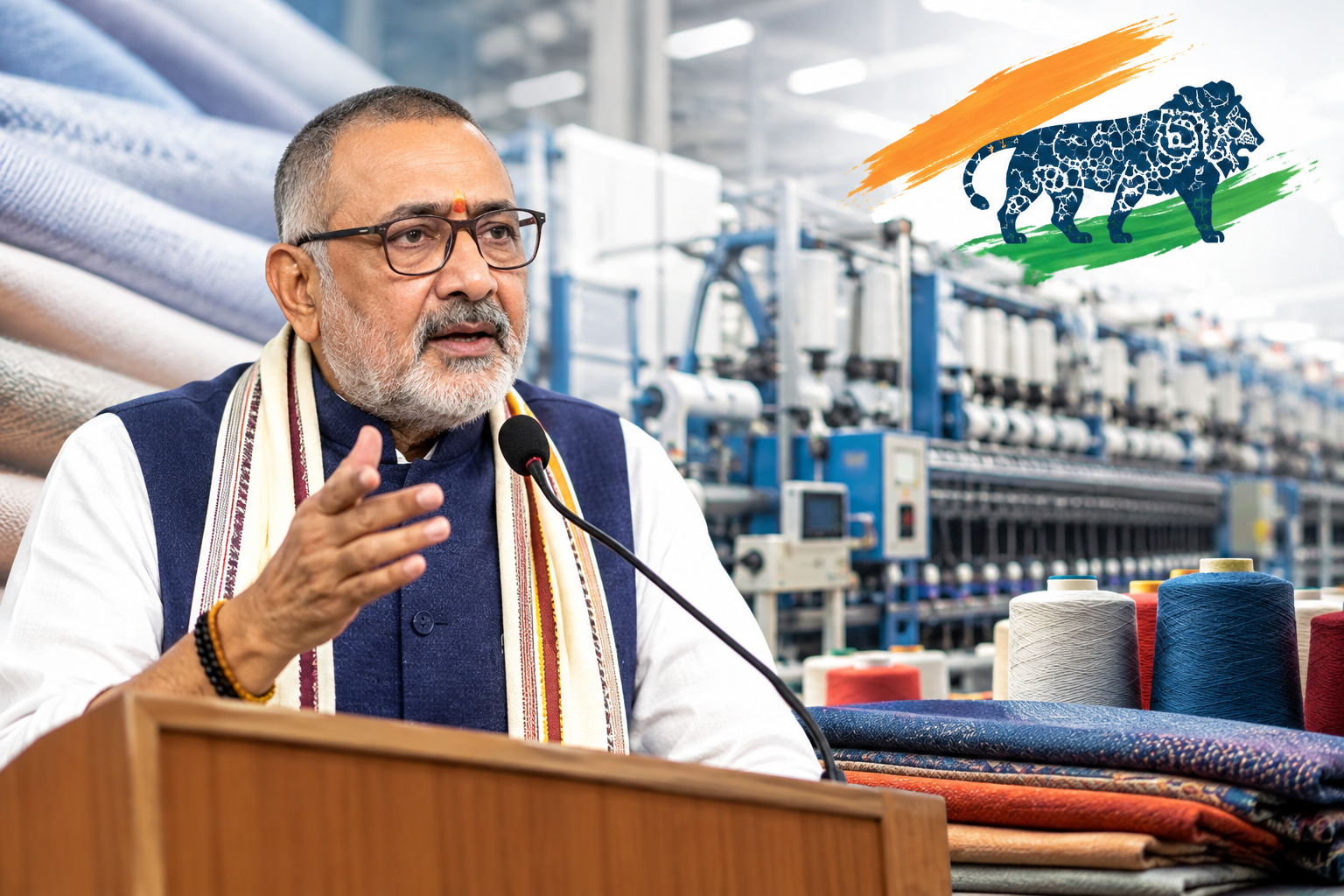
Union Minister Giriraj Singh has called for strengthening domestic textile machinery manufacturing, upgrading technology and expanding research and development (R&D) to reduce India's reliance on imports. Speaking in Surat, a major hub for the country's textile industry, the minister emphasised the need for coordinated efforts by the central government, state government and industry to advance the Make in India initiative.
The minister's visit coincided with the foundation day of the Man-Made Textiles Research Association (MANTRA). His first engagement in Surat was a meeting with stakeholders from the textile machinery sector, where he highlighted the importance of developing domestic manufacturing capabilities to meet the industry's machinery requirements.
“I can proudly state that my goal is to ensure that all machinery, considering the annual value of ₹25,000 to ₹30,000 crore, is produced domestically,” Singh said, underlining the scale of the opportunity for India's textile machinery manufacturing sector.
He also urged manufacturers to upgrade their technology to strengthen domestic capabilities and improve the industry's competitiveness. Greater investment in R&D, he indicated, would be important in building a stronger manufacturing ecosystem and supporting technological advancement across the textile value chain.
Singh stressed that collaboration among the central government, state government and industry would be essential to achieving these objectives. By focusing on research, technological modernisation and domestic production, India aims to reduce its dependence on imported textile machinery and build a more self-reliant manufacturing base.
The minister's remarks highlight the strategic importance of textile machinery manufacturing in strengthening India's textile sector, supporting the Make in India initiative and creating opportunities for domestic manufacturers to meet a substantial share of industry demand.


