
NATIONAL FIBRE SCHEME NFS ₹16 000 CRORE TEXTILES MINISTRY UNION BUDGET 2026-27 INDIAN TEXTILE INDUSTRY FIBRE PRODUCTION DOMESTIC FIBRE PRODUCTION NATURAL FIBRES NEW-AGE FIBRES SILK WOOL JUTE IMPORT DEPENDENCE FIBRE IMPORTS GOVERNMENT SUBS NATIONAL
NEW DELHI, INDIA
By IFAB MEDIA - NEWS BUREAU - November 20, 2026 | 202 3 minutes read





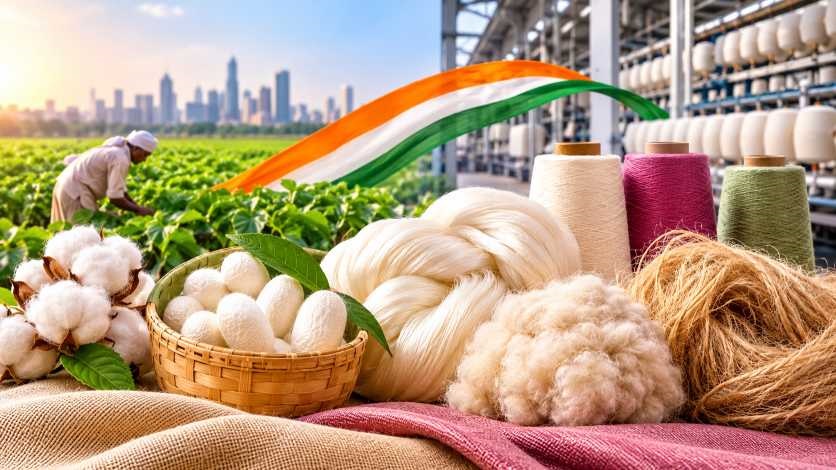
The Textiles Ministry has proposed an outlay of around Rs 16,000 crore over five years for the National Fibre Scheme (NFS), aimed at strengthening domestic fibre production, reducing import dependence and positioning India as a global hub for high-quality fibres.
Announced in the Union Budget 2026-27, the scheme will cover natural and new-age fibres, including silk, wool and jute. It will also seek to create a more uniform structure of government assistance across fibre segments, as reported by The Economic Times.
"The scheme is at the approval stage," an official said.
Proposed Subsidies and Financial Assistance
Under the proposed framework, financial assistance will range from 25 percent to 75 percent of project costs, depending on the intervention.
Most support for farmers, artisans and entrepreneurs is expected to cover 40-50 percent of unit costs, with the remaining amount coming from beneficiaries, state governments or institutional credit.
The proposed structure includes a 40 percent subsidy for cultivation inputs such as seeds and planting materials, while farm mechanisation, plantations, irrigation and seed infrastructure could receive 50 percent support.
Machinery subsidies will vary according to scale, with 50 percent assistance for small-scale machinery used by artisans and reelers, 30 percent for medium-scale machinery and 25 percent for large-scale machinery.
Marketing infrastructure and e-commerce initiatives could receive 40 percent support, while innovation and research and development projects may receive 60 percent assistance.An official said the proposed rates were indicative and subject to final approval.
Focus on Employment and Value Addition
The scheme aims to increase fibre production, improve quality, modernise primary processing and strengthen supply chains from farms to fibre manufacturing.
It also seeks to promote research, innovation and value addition while creating employment and skill development opportunities, particularly for women and rural youth.
The NFS will succeed Silk Samagra-2, the National Jute Development Programme and the Integrated Wool Development Programme, which ran until 2025-26.


