
UNION BUDGET 2026–27 TEXTILE INDUSTRY APPAREL SECTOR FASHION INDUSTRY MODERNISATION SKILLING SUSTAINABILITY WOMEN-LED GROWTH MEGA TEXTILE PARKS NATIONAL FIBRE SCHEME TEXT-ECON SAMARTH 2.0 MANUFACTURING CLUSTERS RURAL EMPLOYMENT ARTISAN EMP NATIONAL
MUMBAI, MAHARASHTRA, INDIA
By IFAB MEDIA - NEWS BUREAU - February 2, 2026 | 0 4 minutes read





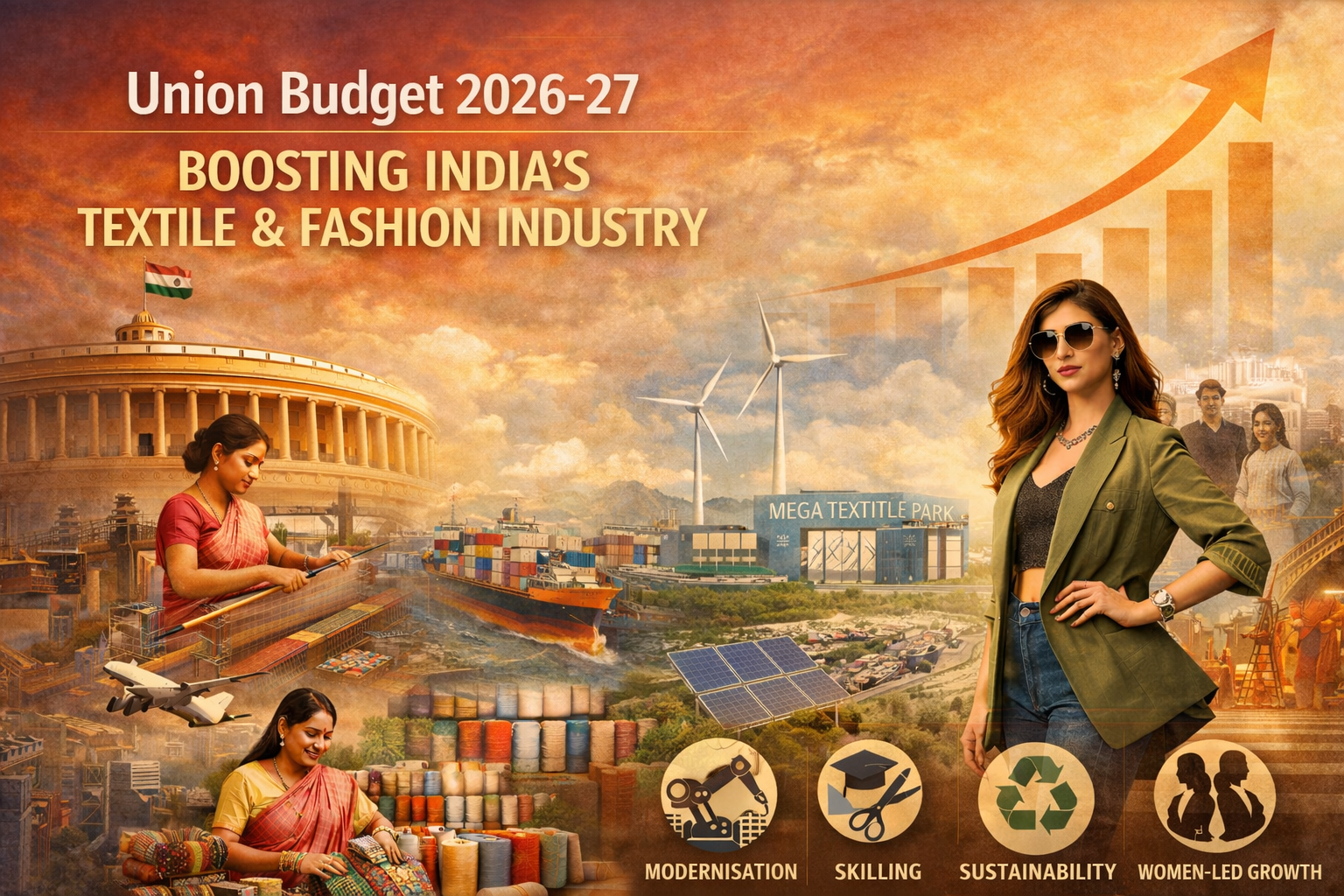
The Union Budget 2026–27 has laid out a forward-looking roadmap for India’s textile and apparel industry, placing strong emphasis on modernisation, skilling, sustainability, and global competitiveness. With renewed focus on fibre self-reliance, upgraded manufacturing clusters, and targeted sectoral initiatives, the Budget aims to strengthen the country’s position as a global fashion and textile hub.
Industry leaders have welcomed the government’s continued commitment to building resilient supply chains and empowering traditional and contemporary fashion ecosystems alike.
Commenting on the Budget, Akhil Jain, CEO & MD, Madame, highlighted its impact on design-led and women-focused brands. “The Union Budget 2026–27 takes a meaningful step towards strengthening India’s textile and apparel ecosystem, with a clear focus on modernisation, skilling, and sustainability. For contemporary fashion brands, the emphasis on fibre self-reliance, upgraded manufacturing clusters, and initiatives like Text-ECON and SAMARTH 2.0 will support more agile, responsible, and design-led growth. Importantly, the renewed push for handloom, handicrafts, and rural employment has the potential to increase women's economic participation across the value chain. For women-focused brands like Madame, this enables deeper local sourcing, sharper innovation, and more inclusive growth aligned with evolving consumer expectations.”
Echoing similar optimism, Sidhant Keshwani, Founder and CEO of Libas, described the Budget as a long-term catalyst for industry transformation. “The Union Budget 2026–27 presents a visionary, long-term roadmap for India’s textile industry. By focusing on Mega Textile Parks and the National Fibre Scheme, the government is building the infrastructure needed to turn India into a global fashion leader. These steps will provide a massive boost to the sector, helping it transition from traditional roots to a modern, high-speed manufacturing powerhouse.”
He further emphasised the importance of technology and artisan empowerment, stating, “The new Text-ECON initiative and modernization schemes directly address the industry's need for better technology and global competitiveness. Furthermore, programs like SAMARTH 2.0 and the Mahatma Gandhi Gram Swaraj Initiative will empower our artisans, linking traditional crafts with global markets.”
“At Libas, we have always focused on speed and scaling Indian wear. We welcome this budget as it tackles key industry pain points like skilling and supply chain gaps. These measures will help accelerate growth and take Indian fashion to the world stage,” he added.
With its integrated approach towards infrastructure development, skill enhancement, sustainability, and women-led growth, the Union Budget 2026–27 is expected to create new opportunities across the textile and fashion value chain. Industry stakeholders believe these measures will not only strengthen domestic manufacturing but also enhance India’s global competitiveness in the evolving fashion landscape.


