

CBRE JEWELLERY RETAIL LARGE-FORMAT STORES EXPERIENCE CENTRES ORGANISED RETAIL LEASING HYDERABAD CHENNAI BENGALURU DELHI-NCR LAB-GROWN DIAMONDS PREMIUM RETAIL JEWELLERY PRECINCTS D2C JEWELLERY BRANDS LUXURY RETAIL PHYGITAL RETAIL CONVENTION 2 NATIONAL
MUMBAI, MAHARASHTRA, INDIA
By IFAB MEDIA - NEWS BUREAU - May 14, 2026 | 191 11 minutes read





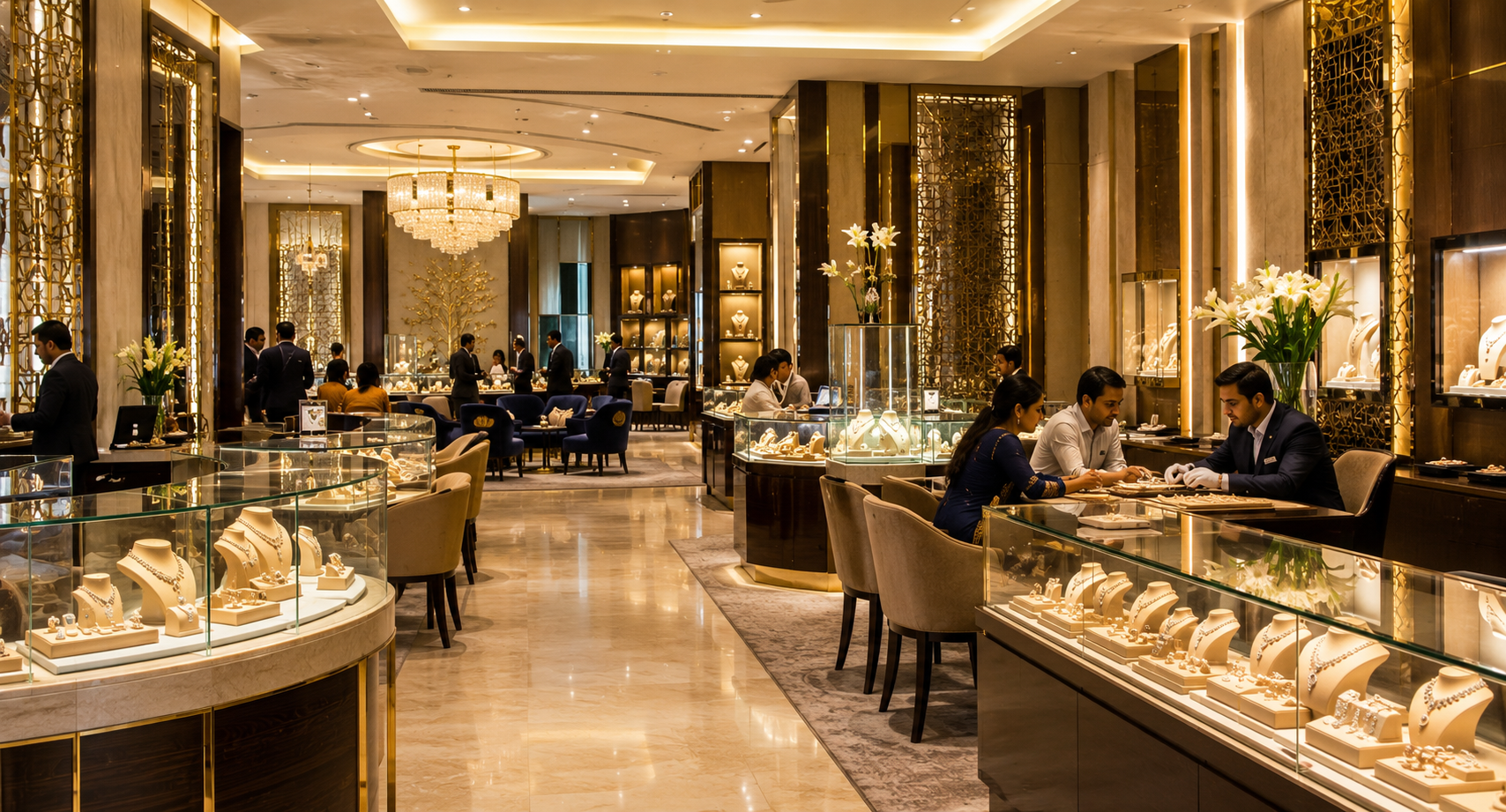
India’s retail sector is undergoing a notable transformation, with the share of large-format stores (exceeding 8,000 sq. ft.) in jewellery leasing rising sharply from 14% in 2019 to 50% in 2025, according to "All that Glitters: Jewellery Brands Recast India's Retail Footprint," a report released by leading real estate consultancy CBRE South Asia Pvt. Ltd at the Phygital Retail Convention 2026 in Mumbai today. This reflects a repositioning of jewellery from a product-based transaction to an experience-led retail category.
The report notes that leading brands are transitioning from conventional 1,500-2,500 sq. ft. stores to large-format showrooms serving as “experience centres”. These feature private VIP bridal lounges, Augmented Reality-powered virtual try-on zones, dedicated gallery spaces for high-value collections, and personalised consultation rooms.
New market entrants and regional players in tier-II and tier-III cities are also leasing 8,000+ sq. ft. spaces, matching the scale of established national legacy flagships.
"The rapid expansion of large-format, experience-led stores signals a structural shift that is reshaping how brands engage with consumers and how developers design their tenant mix,” said Anshuman Magazine, Chairman & CEO - India, South-East Asia, Middle East & Africa, CBRE. “Jewellery is emerging as the definitive premium anchor, delivering strong revenue performance, enhancing destination stature, attracting affluent shoppers, and strengthening long-term asset value.”
The report also outlines that the sector's share in total organised retail leasing has risen from 2% in 2019 to 8% in 2025, placing jewellery among the top three demand drivers in India's retail market, after fashion & apparel and F&B.
The momentum in leasing activity has been equally striking.
Absorption by jewellery brands doubled from 0.4 million sq. ft in 2024 to 0.8 million sq. ft in 2025, with Hyderabad, Chennai, Bengaluru, and Delhi-NCR collectively accounting for the majority of that demand.
The report further highlights the growing emergence of dedicated jewellery precincts within large malls in the country. Developers are proactively curating specialised jewellery zones by providing reinforced vaults and high-density specialised lighting, to accommodate the unique technical and operational requirements of jewellery retail.
The tenant mix within the jewellery category is also evolving. Fine Jewellery continued to dominate at 72% of leasing in 2025, but the share of leasing by Lab-Grown Diamond (LGD) brands rose from 5% in 2024 to 8% in 2025, reflecting a broader shift in consumer preferences.
According to Ram Chandnani, Managing Director – Leasing, CBRE India, “LGDs have emerged as a significant trend, appealing to both Gen Z and millennial cohorts. By offering ethical transparency at a 60-80% lower price point, brands in this category are making luxury more accessible to value-conscious, socially responsible consumers.”
The clustering dynamic is reinforced by city-level concentration; notably, Hyderabad’s share of jewellery leasing doubled from 15% in 2024 to 31% in 2025. During the same year, Hyderabad, Chennai, Delhi-NCR, Bengaluru, and Mumbai together accounted for more than 90% of the total leasing volume, underscoring the primacy of these five key markets as anchors for India’s organised jewellery retail expansion.
|
City |
Share of total jewellery leasing, 2024 |
Share of total jewellery leasing, 2025 |
|
Hyderabad |
15% |
31% |
|
Chennai |
16% |
27% |
|
Bengaluru |
18% |
14% |
|
Delhi-NCR |
24% |
10% |
|
Mumbai |
6% |
10% |
|
Pune |
14% |
3% |
|
Kolkata |
2% |
3% |
|
Ahmedabad |
5% |
2% |
Source: CBRE Research, Q2 2026
Jewellery brands are also moving away from a “one-size-fits-all” approach to leasing. They now deploy diversified multi-format portfolios: large-format stores (8,000+ sq. ft.) for brand building and immersive experience; boutique stores in malls (1,500-3,000 sq. ft.) targeting daily-wear buyers; and Shop-in-Shop (SIS) formats in department stores to capture high footfall without the overheads of independent leases.
D2C jewellery brands have simultaneously transitioned from digital disruptors to mainstream retail anchors, filling the ‘middle-market gap’ between mass fashion jewellery and fine jewellery, with a footfall-first location strategy that prioritises high-visibility mall atriums, transit hubs, and affluent residential high streets.
While tier-I cities continue to drive overall revenues, tier-II and tier-III markets are delivering stronger store-level profitability, supported by lower costs and higher average transaction values.


