



INDIAN PEACOCK HANDLOOM WEAVERS ARTISAN COLLABORATION SLOW FASHION EVERYDAY WEAR PREETHI PATHIREDDY JAMDANI IKAT HAND BLOCK PRINT MANGALGIRI SUSTAINABLE FASHION TEXTILE HERITAGE FAIR WAGES CONSCIOUS LIVING INDIAN TEXTILES NATIONAL
HYDERABAD, TELANGANA, INDIA
By IFAB MEDIA - NEWS BUREAU - April 25, 2026 | 53 4 minutes read





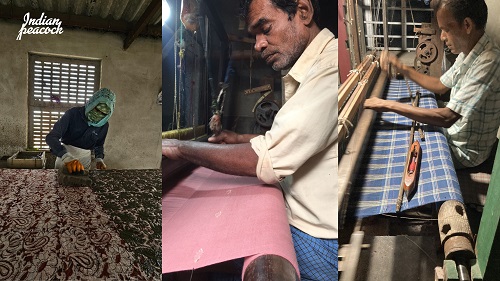
The story of India’s handloom weavers—masters of generational craft—has long stood at a crossroads, where heritage meets uncertainty. Despite the richness of their artistry, many of these crafts have gradually been pushed to the margins, often confined to museums or labelled as “ethnic wear,” while the livelihoods of the artisans behind them have faced growing instability. The challenge has never been the value of the craft, but rather the barriers that exist between the loom and everyday life.
Attempting to bridge this gap is Indian Peacock, a brand built on direct collaboration with artisans and a philosophy rooted in relevance rather than reinvention.
Founded by architect Preethi Pathireddy, Indian Peacock reflects a journey where architecture meets textiles, and structure meets softness. An Ivy League alumna, Pathireddy brings a design sensibility shaped by her background, intuitively connecting form, texture, and cultural heritage. What began as a personal exploration of India’s textile legacy has evolved into a brand committed to slow fashion and conscious living.
At the core of Indian Peacock’s approach is its collaboration with handloom artisans across the country, including Jamdani weavers of West Bengal, Ikat weavers of Telangana, handblock print artisans of Rajasthan, and Mangalgiri weavers of Andhra Pradesh. These artisans are not treated as vendors, but as partners. The brand engages closely with their processes, stories, and craft, ensuring fair wages and consistent work, moving beyond the limitations of seasonal demand.
Rather than attempting to “modernise” traditional craft, Indian Peacock takes a more grounded approach—making it wearable for everyday life. Its collections include structured shirts, versatile kurtas, and thoughtfully designed coord sets, positioning handwoven textiles not as occasionwear, but as part of daily wardrobes. The intent is clear: to bring craft into the rhythm of everyday living, where it is worn, used, and valued consistently.
This philosophy reflects a broader belief that handloom survives not through admiration alone, but through regular use. By creating garments that become part of weekly routines rather than rare occasions, the brand contributes to keeping looms active, skills relevant, and livelihoods stable.
Indian Peacock’s narrative moves away from the idea of “rescuing” artisans, instead focusing on providing access to markets, fair economics, and respect. It positions tradition not as something to be preserved in isolation, but as a living, evolving practice that remains necessary in contemporary contexts.
Each garment, the brand notes, carries the presence of its maker. Collections begin with the textile rather than trends, guided by a central question: does the design serve the craft and the craftsperson? In doing so, Indian Peacock seeks to place artisan work back into spaces where it naturally belongs—modern streets and everyday lives.
The process extends beyond weaving. At its Hyderabad studio, garments are cut, stitched, and finished by a team that upholds the same level of care embedded in the textiles themselves. The brand emphasises that craft does not exist in isolation, and neither does its ecosystem. Fair wages, consistent work, and a supportive environment are principles applied across every stage of production.
Through this integrated approach, Indian Peacock is not only creating garments but also contributing to a broader shift—one where Indian textiles move beyond heritage narratives and re-enter contemporary life with purpose, dignity, and continuity.


